I've spent close to 50 years working with role-playing games in various capacities—as a player, game master, designer, researcher, and therapeutic practitioner. In parallel, I've been writing code since 1979, building systems that range from simple pattern-matching programs on university mainframes to distributed GPU clusters processing modern AI workloads. These two paths—gaming and computing—have intersected repeatedly throughout my career in ways that weren't always obvious at the time but now seem almost inevitable in retrospect.
Over the past several years, I've found myself juggling roles across multiple organizations—some overlapping in mission, others completely independent, all working toward making specific impacts in their respective domains. As Chief Information Technology Officer (CITO) of Practicing Musician SPC and CITO + Co-Founder of ClimbHigh.AI, I've been deeply involved in building educational technology platforms that are trying to address some fundamental problems I've observed across decades in both the tech industry and educational spaces.
This is Part 5 of a 5-part series documenting the technical evolution from early introduction to role-playing gaming in 1977 and hobby programming in 1979 to modern distributed GPU computing and self-hosted Artificial Intelligence (AI) infrastructure. The series traces patterns that emerged over four decades and shows how they apply to current challenges in AI development and computational independence. This final part brings together four decades of lessons in DGPUNET's, AILCPH's, & SIIMPAF's architecture, explaining how patterns from 1979 remain relevant in 2025.
This part addresses the GPU scarcity challenge and demonstrates how decades-old distributed computing patterns apply to modern AI infrastructure.
This is Part 3 of a 5-part series documenting the technical evolution from early introduction to role-playing gaming in 1977 and hobby programming in 1979 to modern distributed GPU computing and self-hosted Artificial Intelligence (AI) infrastructure. The series traces patterns that emerged over four decades and shows how they apply to current challenges in AI development and computational independence. This part focuses on applying technical skills to therapeutic and educational contexts, culminating in systems that outperformed commercial alternatives.
This is Part 2 of a 5-part series documenting the technical evolution from early introduction to role-playing gaming in 1977 and hobby programming in 1979 to modern distributed GPU computing and self-hosted Artificial Intelligence (AI) infrastructure. The series traces patterns that emerged over four decades and shows how they apply to current challenges in AI development and computational independence. This part focuses on scaling patterns from single systems to networks and building production infrastructure on commodity hardware.
This is Part 1 of a 5-part series documenting the technical evolution from early introduction to role-playing gaming in 1977 and hobby programming in 1979 to modern distributed GPU computing and self-hosted Artificial Intelligence (AI) infrastructure. The series traces patterns that emerged over four decades and shows how they apply to current challenges in AI development and computational independence.
Over the past several months, I've been working on something that started as a practical necessity but evolved into a philosophical statement about accessibility in AI development. When a startup couldn't get anything better than a pitiful G10 GPU instance from their cloud provider - completely insufficient for the machine learning workloads needed - I realized I had to take matters into my own hands, and home...
At ClimbHigh.AI (https://www.climbhigh.ai), our team, led by CEO Jake Douglass, is building something revolutionary: a platform where creators own 67% of the content equity. Not revenue sharing. Actual ownership...
I've liked using Claude.ai in many areas, but they are starting to get overwhelmed and have begun throttling "top 5% users", which apparently I am. But they aren't offering ANY transparency about this...
January 9th, 2024, 10:00 am Pacific Time, BitDefender Total Security Alert: @janhq\inference-nitro-extension\dist\bin\win-cpu\nitro.exe is infected with Gen:Variant.Tedy.258323 !
How diagnostic thinking learned in auto repair shops applies to building, troubleshooting, and improving, artificial intelligence systems.
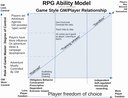
It is funny to see what various Machine Learning (ML) so-called by layperson too readily as "Artificial Intelligence" (AI), create a butchery of the Hawkes-Robinson RPG Models and theories. This posting includes example excerpts from the wackiness that occurs.
Wrapping up work on automated scalability of Jitsi (self-hosted 20k+ concurrent users) through combination of Ansible scripts, Docker, containerd, Kubernetes, etc., in AWS and vSphere. Looking forward to resuming previous years work on Matrix distributed data and communications self-hosted federated platform adapted for education, implementing Automated Speech Recognition (ASR), bots, Artificial Intelligence (AI), Machine Learning (ML), and distributed Deep Neural Networks (DNN).







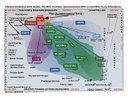
![Scalable Jitsi, Ansible automation, [matrix], bots, ASR, AI, ML, DNN](https://www.hawkerobinson.com/news/scalable-jitsi-ansible-automation-matrix-bots-asr-ai-ml-dnn/@@images/8c609808-846a-45f0-af5d-5f710c21c8f4.jpeg "Scalable Jitsi, Ansible automation, [matrix], bots, ASR, AI, ML, DNN")